
From Backyard Rinks to NHL Dreams: How U.S. High School Hockey Is Shaping Future Pros
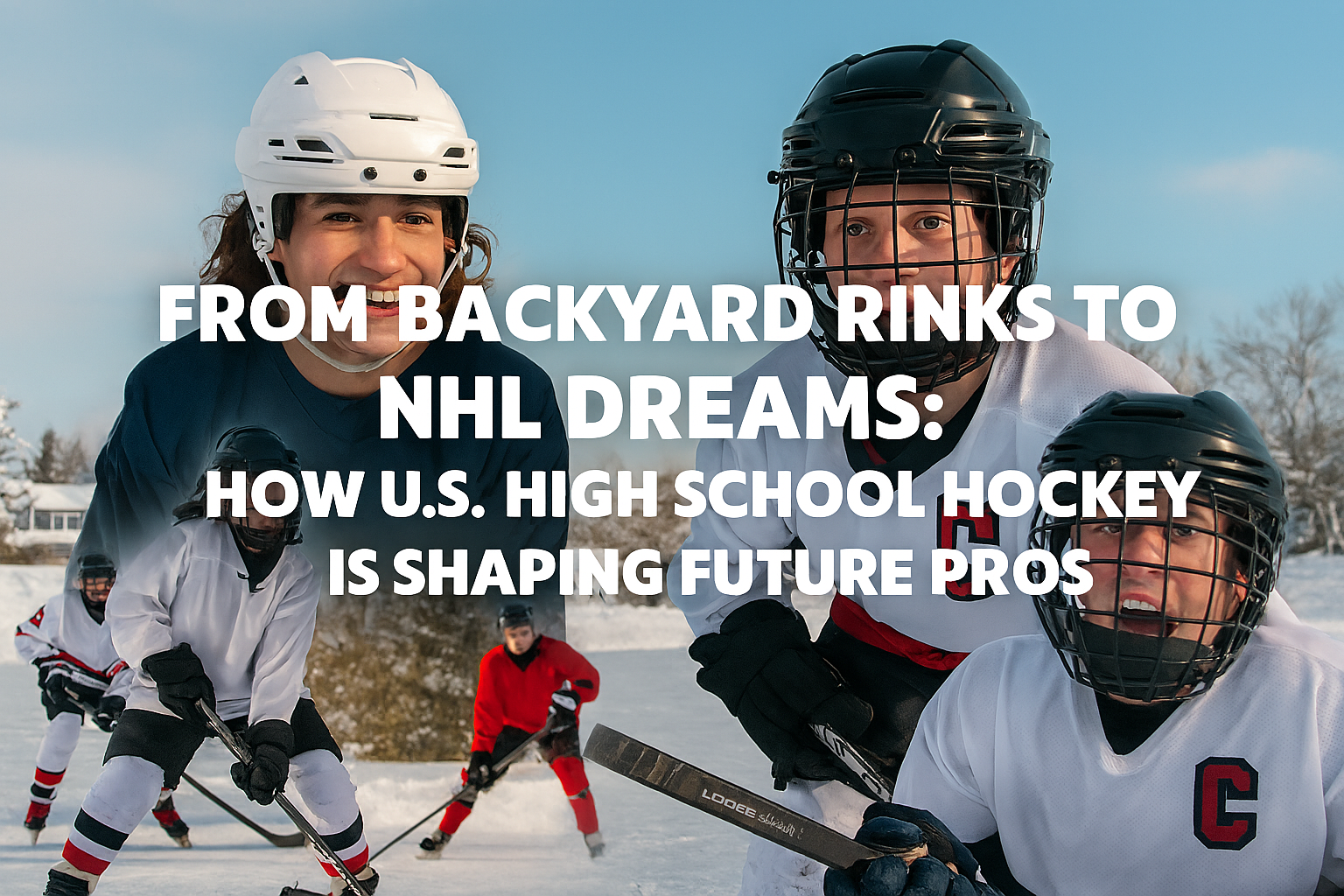
Author: 1Rink Editor
For many aspiring hockey players and their families, the journey to the NHL can feel like navigating a maze. While junior leagues and prep academies often dominate the conversation, one pathway is quietly gaining traction: U.S. high school hockey. Once considered a secondary route, high school programs—especially in states like Minnesota, Massachusetts, and Michigan—are now producing NHL-caliber talent with increasing regularity. This blog explores how high school hockey is evolving into a legitimate scouting ground, spotlighting players who’ve made the leap and offering insights for families considering this route.
Why High School Hockey Deserves a Second Look
Historically, scouts focused on junior leagues and elite development programs. But in recent years, high school hockey has become a fertile ground for identifying raw talent and character. The reasons are compelling:
- Development Over Exposure: Players often get more ice time and leadership opportunities in high school programs compared to crowded junior teams.
- Academic Balance: Families appreciate the ability to combine strong academics with competitive hockey, keeping NCAA eligibility intact.
- Community Support: Local fanbases and school pride create a unique environment that fosters confidence and resilience.
According to USA Hockey, over 45,000 players participate in high school hockey annually, and the number of scouts attending state tournaments has steadily increased over the past decade.
Player Spotlights: From High School Heroes to NHL Hopefuls
Case Study 1: Brock Faber (Minnesota High School Hockey)
Brock Faber’s journey began at Maple Grove High School in Minnesota. Known for his poise and puck-moving ability, Faber opted to stay in high school longer than many of his peers. His decision paid off—he was drafted 45th overall by the Los Angeles Kings in 2020 and later traded to the Minnesota Wild. Faber went on to play for the University of Minnesota, where he captained the team and earned national recognition.
“Staying in high school allowed me to grow as a leader and refine my game without the pressure of constant travel,” Faber told The Athletic .
Case Study 2: Matt Boldy (Massachusetts High School Hockey)
Matt Boldy played for Dexter Southfield School in Massachusetts before joining the U.S. National Team Development Program (USNTDP). His high school years were crucial in building his offensive instincts and confidence. Boldy was drafted 12th overall by the Minnesota Wild in 2019 and quickly became a top-six forward in the NHL.
Boldy’s coach at Dexter, Dan Donato, emphasized the importance of character: “We focused on developing Matt as a person first. That maturity translated directly to his game.”
Case Study 3: Owen Power (Michigan High School Roots)
Before becoming the first overall pick in the 2021 NHL Draft, Owen Power played for Mississauga Reps and then moved to the Chicago Steel in the USHL. But his early development was shaped by his time at St. Joseph’s Catholic High School in Ontario, where he balanced academics and hockey. Power later starred at the University of Michigan, showcasing how high school foundations can support elite NCAA careers.
“The structure and support I had in high school helped me stay grounded,” Power shared in an interview with Sportsnet .
Scouting Insights: What Scouts Look for in High School Players
Scouts attending high school games are looking beyond stats. Here’s what they prioritize:
- Skating Mechanics: Fluid stride, edge control, and acceleration are key indicators of long-term potential.
- Hockey IQ: Decision-making under pressure, positioning, and anticipation matter more than flashy plays.
- Coachability: Scouts often speak with coaches and teammates to assess a player’s attitude and work ethic.
- Consistency: Performing well in both marquee matchups and routine games shows reliability.
“We’re not just looking for the best player on the ice—we’re looking for the best teammate, the most adaptable learner,” said an NHL scout during the Minnesota State Tournament, as reported by Star Tribune .
How Families Can Support the High School Pathway
For parents, navigating the hockey world can be overwhelming. Here are some actionable tips:
- Choose the Right Program: Look for schools with strong coaching, facilities, and academic support.
- Build Relationships: Encourage your player to connect with coaches, mentors, and alumni.
- Track Progress: Keep a journal of development milestones, feedback from coaches, and personal goals.
- Stay Patient: Development is not linear. Trust the process and avoid rushing into junior leagues prematurely.
Looking Ahead: NCAA Eligibility and the Changing Landscape
With the recent rule change allowing CHL players to retain NCAA eligibility starting in 2025, the scouting landscape is shifting. However, high school hockey remains a valuable route for players who want to prioritize education and development. The flexibility of this pathway allows players to explore USHL, NAHL, or prep programs after graduation, keeping multiple doors open.
“We’re seeing more NHL prospects come from diverse backgrounds, and high school hockey is absolutely part of that mix,” said Jason Bukala, a former NHL scout and current analyst for Sportsnet .
Conclusion: The Ice Is Yours
High school hockey may not have the glitz of major junior leagues, but it offers something arguably more important—time, space, and support to grow. For players and families willing to embrace the journey, the rewards can be immense. Whether your child dreams of NCAA glory or NHL stardom, don’t overlook the power of the high school rink. It might just be the perfect place to start.
Sources:
- USA Hockey Annual Report 2024
- The Athletic: “Brock Faber’s Journey from Maple Grove to the NHL”
- MassLive Sports: “Matt Boldy’s Rise Through Dexter Southfield”
- Sportsnet: “Scout’s Analysis: Comparing How Leagues Develop NHL Prospects”
- Star Tribune: “Minnesota State Tournament Draws NHL Scouts”