
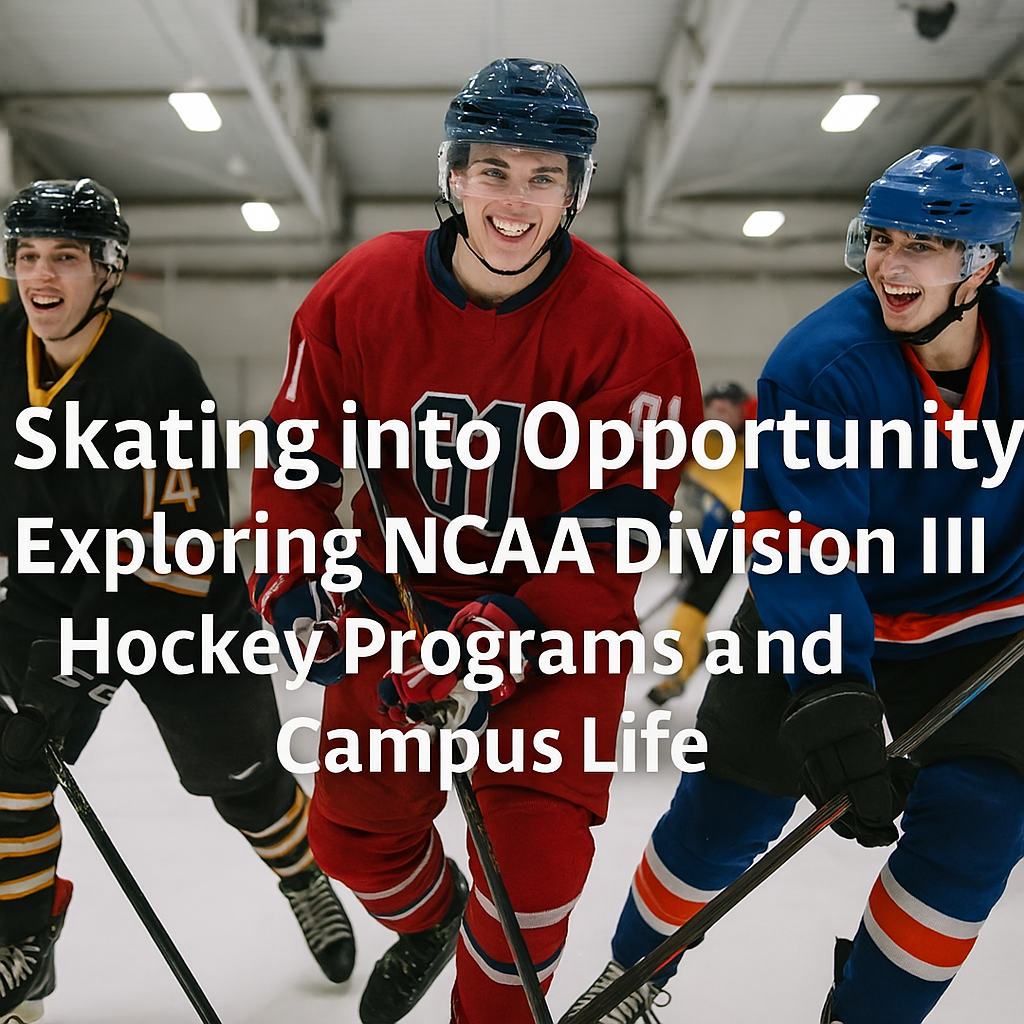
Skating into Opportunity: Exploring NCAA Division III Hockey Programs and Campus Life
Author: 1Rink Editor
For many aspiring hockey players and their families, the journey toward collegiate hockey often begins with a whirlwind of scouting showcases, recruitment conversations, and academic planning. While Division I programs tend to dominate headlines, NCAA Division III schools offer a compelling blend of competitive hockey, rigorous academics, and vibrant campus life that deserves serious consideration. This blog introduces a few standout DIII programs and highlights what makes them unique—not just on the ice, but across their campuses and communities.
Why Consider NCAA Division III?
Division III hockey is often misunderstood. While these programs don’t offer athletic scholarships, they do provide a high level of competition, strong coaching, and a balanced student-athlete experience. For players who value academics and want to continue developing their game, DIII schools can be the perfect fit. According toNCSA Sports , many DIII schools rank among the top liberal arts colleges in the country, offering excellent education alongside competitive hockey.
Amherst College (Amherst, MA)
Located in the picturesque Pioneer Valley of Massachusetts, Amherst College is a member of the New England Small College Athletic Conference (NESCAC). The Mammoths have a storied hockey tradition dating back to 1908 and have made multiple NCAA tournament appearances. Off the ice, Amherst is known for its open curriculum, small class sizes, and tight-knit campus community. The college’s commitment to academic excellence and inclusivity makes it a top choice for student-athletes seeking a well-rounded experience.
Endicott College (Beverly, MA)
Endicott College has quickly emerged as a force in DIII hockey. The Gulls, competing in the Commonwealth Coast Conference (CCC), have made several NCAA tournament appearances since launching their program in 2015. Endicott’s campus sits along the Atlantic coast, offering stunning views and a strong sense of community. With a focus on experiential learning, every student completes internships as part of their degree, making it a great environment for players thinking beyond the rink.
Bowdoin College (Brunswick, ME)
Bowdoin College, another NESCAC member, combines elite academics with a rich hockey tradition. The Polar Bears have been competing since 1919 and boast a loyal fan base and competitive schedule. Bowdoin’s campus is known for its historic architecture and proximity to Maine’s natural beauty. The college emphasizes leadership, global citizenship, and intellectual curiosity—values that resonate with many hockey families looking for more than just wins and losses.
St. Olaf College (Northfield, MN)
Located in the hockey heartland of Minnesota, St. Olaf College competes in the Minnesota Intercollegiate Athletic Conference (MIAC). The Oles offer a strong hockey program and a campus culture rooted in tradition and community. With a scenic hilltop campus and a focus on the liberal arts, St. Olaf provides a supportive environment for student-athletes. The school’s music and arts programs are nationally recognized, adding depth to the college experience for players with diverse interests.
Lake Forest College (Lake Forest, IL)
Just north of Chicago, Lake Forest College offers a unique mix of urban access and suburban tranquility. The Foresters compete in the Northern Collegiate Hockey Association (NCHA) and have built a reputation for gritty, disciplined play. Lake Forest emphasizes personalized education, with small class sizes and strong faculty mentorship. For players who want to stay close to a major city while enjoying a tight-knit campus, Lake Forest is a compelling option.
Balancing Hockey and Academics
One of the defining features of DIII hockey is the emphasis on balance. Players are expected to excel in the classroom and contribute meaningfully to campus life. Unlike some higher-profile programs, DIII teams often foster a culture of accountability and personal growth. Coaches understand that their athletes are students first, and they work to support both athletic and academic development.
According toProductive Recruit , many DIII schools have strong graduation rates and offer generous financial aid packages, making them accessible to families from a range of backgrounds. This holistic approach appeals to parents who want their children to thrive both on and off the ice.
Campus Culture and Community
Beyond hockey, DIII schools offer vibrant campus cultures. Whether it’s participating in student government, joining a club, or attending campus events, players are encouraged to engage fully in college life. This integration helps build lifelong friendships and prepares athletes for success after graduation.
For example, Amherst and Bowdoin are known for their strong alumni networks and career services, while Endicott’s internship model ensures students graduate with real-world experience. These elements contribute to a fulfilling college journey that extends far beyond the rink.
Final Thoughts for Families
Choosing a college is one of the most important decisions a young athlete will make. While DIII programs may not have the same spotlight as their D1 counterparts, they offer a powerful blend of competition, education, and community. For players who want to keep playing the game they love while preparing for life beyond hockey, these schools represent opportunity in its purest form.
As scouting season ramps up, families should take the time to explore these programs, visit campuses, and talk to coaches. The right fit isn’t just about ice time—it’s about finding a place where a player can grow, thrive, and make lasting memories.
Sources:NCSA Sports ,Productive Recruit ,Wikipedia