
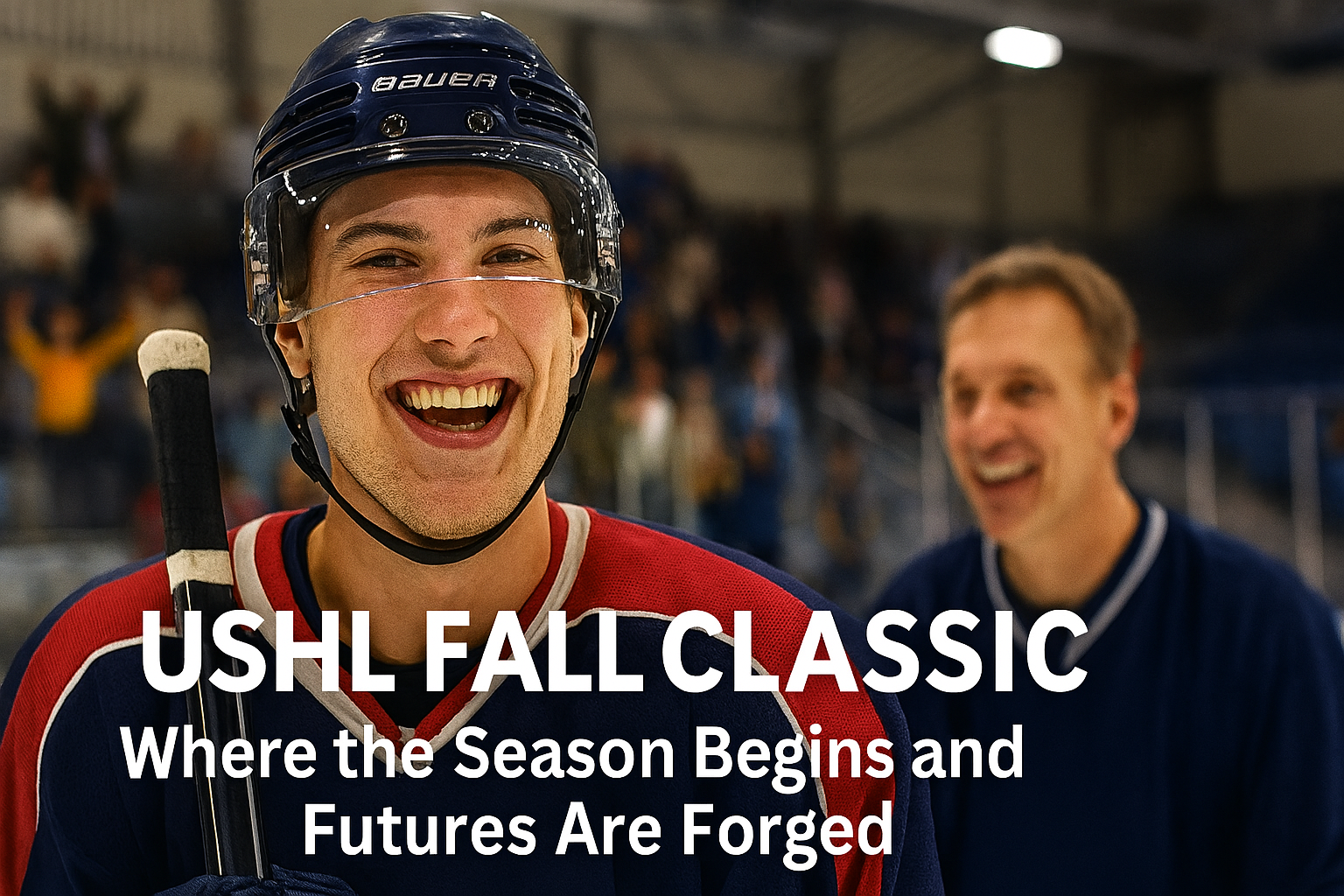
USHL Fall Classic: Where the Season Begins and Futures Are Forged
Author: 1Rink Editor
Every September, the hockey world turns its attention to Cranberry Township, Pennsylvania, where theUSHL Fall Classic kicks off the junior hockey season in dramatic fashion. Held at the UPMC Lemieux Sports Complex, this six-day event is more than just a showcase—it's a proving ground, a launchpad, and a rare convergence of elite talent, scouts, and opportunity. For players and parents navigating the junior hockey landscape, understanding the significance of the Fall Classic is essential.
Why the Fall Classic Matters
The USHL Fall Classic is the official start of the regular season for all 16 teams in the United States Hockey League. But unlike a typical opening weekend, this event is designed to maximize exposure and competition. Each team plays two regular-season games, and every shift is scrutinized by over 400 scouts from professional and junior organizations. According toUSA Hockey , the event also includes elite youth tournaments, drawing thousands of players and spectators, and creating a festival-like atmosphere that celebrates the sport at every level.
For players, the stakes are high. Perform well here, and your name could be on a scout’s radar for the rest of the season. Struggle, and you may need to work twice as hard to regain attention. The Fall Classic is not just about talent—it's about timing, preparation, and mental toughness.
A Unique Scouting Environment
Unlike scattered games across the country, the Fall Classic centralizes talent in one location. This allows scouts to efficiently evaluate players in a competitive setting, comparing performances across teams and age groups. Glenn Hefferan, USHL President and Commissioner, emphasized the importance of this format: “All of the general managers are here… they’re looking for their future prospects, which is what this is all about” (USA Hockey ).
For parents, this means that your child’s performance at the Fall Classic could be the first impression that lasts. It’s not just about goals and assists—it’s about how a player competes, communicates, and adapts under pressure. Scouts are watching everything: body language, bench demeanor, and how players respond to adversity.
Developmental Milestones
One of the most overlooked aspects of the Fall Classic is its role in player development. The event isn’t just about showcasing—it’s about learning. Young athletes get to see firsthand what high-level junior hockey looks like. They observe the pace, the systems, and the physicality required to succeed. For many, it’s a wake-up call that accelerates growth.
Frank Butler, USHL Director of Player Personnel, noted, “It’s really important for young guys to be exposed to this environment… it impacts their growth as a player” (USA Hockey ). Whether you're a 14U player watching from the stands or a 17-year-old suiting up for your first USHL game, the Fall Classic offers lessons that extend beyond the ice.
Spotlight on Emerging Talent
This year’s event features several players already generating buzz. Muskegon Lumberjacks forward Tynan Lawrence, a top prospect for the 2026 NHL Draft, enters the season after a 54-point campaign and a dominant playoff run. Waterloo’s Chase Jette and Green Bay’s Mace’o Phillips are also names to watch, each bringing unique skill sets and leadership qualities to their respective teams (USHL ).
For younger players and families attending the event, these athletes serve as real-time examples of what it takes to reach the next level. Watching them compete, interact with coaches, and handle media attention provides a blueprint for aspiring players.
What Parents Should Know
For parents, the Fall Classic can be overwhelming. The sheer volume of scouts, games, and conversations can make it feel like a whirlwind. But it’s also a valuable opportunity to learn about the junior hockey ecosystem. Take time to observe how teams operate, how players are coached, and how scouts interact with staff. Ask questions, network, and absorb the experience.
It’s also important to manage expectations. Not every player will be scouted, and not every scout will offer feedback. The key is to focus on development and consistency. The Fall Classic is one moment in a long journey. Use it as a benchmark, not a verdict.
Preparing for the Fall Classic
Preparation is everything. Players should arrive physically ready and mentally focused. This means proper nutrition, rest, and a clear understanding of team systems. But it also means being emotionally prepared for the spotlight. The pressure to perform can be intense, and players must learn to channel nerves into energy.
Parents can support this by fostering a positive mindset. Emphasize effort over outcome, and remind your child that scouts value character as much as skill. Encourage reflection after games—what went well, what could improve—and avoid overanalyzing stats or rankings.
Looking Ahead
The USHL Fall Classic is more than a tournament—it’s a cultural touchstone in American junior hockey. It sets the tone for the season, reveals rising stars, and offers a glimpse into the future of the sport. For players and parents, it’s a chance to engage with the game at its highest level and to understand the demands and rewards of the journey ahead.
Whether you're in the stands, on the ice, or watching from home, the Fall Classic is a reminder that hockey is a game of moments—and this is one of the biggest.