
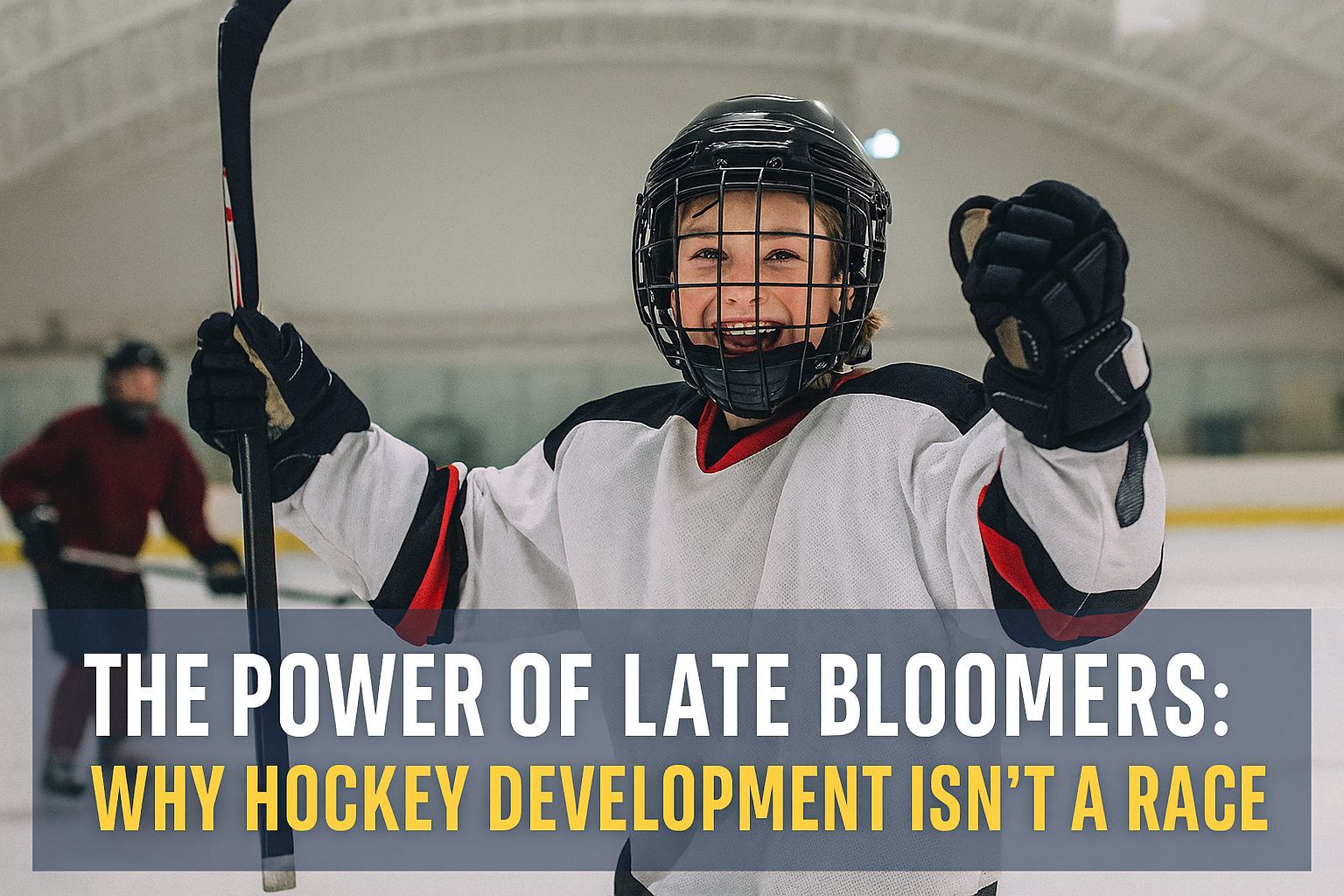
The Power of Late Bloomers: Why Hockey Development Isn’t a Race
Author: 1Rink Editor
In the high-stakes world of youth hockey, it’s easy to feel like time is running out. Parents worry their child is falling behind. Players compare themselves to teammates who hit growth spurts early or dominate the scoresheet. But here’s the truth: hockey development is not linear, and being a “late bloomer” might just be the secret weapon that scouts are quietly watching for.
⏳ The Myth of the Early Peak
From U10 to U18, the pressure to perform early is intense. Players are told that if they’re not on the top line or in the top league by age 14, their chances of making it are slim. But this narrative ignores a crucial reality: many elite players don’t hit their stride until later in their teens—or even in their early twenties.
Consider NHL stars like Mark Stone and Joe Pavelski. Neither were first-round draft picks. Stone was selected 178th overall in the 2010 NHL Draft, and Pavelski went 205th in 2003. Both were overlooked early in their careers, yet developed into elite-level talents through persistence, maturity, and steady growth.
🌱 Why Late Bloomers Thrive
Late bloomers often develop key traits that scouts value deeply:
- Resilience: Players who face adversity early—whether it’s being cut from a team or overlooked—often develop mental toughness that sets them apart later.
- Work Ethic: Without relying on early physical dominance, late bloomers learn to outwork their peers, mastering fundamentals and building habits that last.
- Coachability: Players who aren’t handed top roles early tend to be more receptive to feedback and more adaptable to different systems and roles.
These qualities aren’t always visible on a stat sheet, but they’re the intangibles that scouts and coaches talk about behind closed doors.
📊 What the Data Says
Research from theNational Center for Biotechnology Information shows that relative age effects—where players born earlier in the calendar year are overrepresented in youth hockey—can skew early development opportunities. However, by the time players reach professional levels, these advantages often disappear.
In other words, being the biggest or fastest at age 13 doesn’t guarantee long-term success. In fact, players who develop later often have longer careers because they’ve built their game on skill, intelligence, and adaptability rather than early physical dominance.
🎓 NCAA and the New CHL Eligibility
With the NCAA now allowing CHL players to retain eligibility starting in 2025, the landscape has shifted. Players who may have felt forced to choose between major junior and college hockey now have more flexibility. This is especially beneficial for late bloomers who might not be ready for the CHL at 16 but could thrive in college hockey at 19 or 20.
College hockey has long been a haven for late developers. With older rosters and a focus on physical and mental maturity, NCAA programs often prioritize players who’ve taken a longer path. Scouts know this—and they’re watching.
👨👩👧 Advice for Parents
It’s natural to worry when your child isn’t on the top team or getting the most ice time. But here’s what you can do:
- Focus on development, not status: Skill growth, hockey IQ, and character matter more than league prestige.
- Encourage patience: Remind your child that everyone grows at their own pace. The goal is long-term success, not short-term glory.
- Support their passion: If they love the game, they’ll keep improving. Passion fuels persistence.
🧠 What Scouts Are Really Looking For
Scouts aren’t just looking for the kid who scores the most goals. They’re looking for the player who plays the right way, shows growth, and has the potential to keep improving. Late bloomers often check all those boxes.
As one NCAA scout shared anonymously in a 2024 interview withThe Athletic : “We love kids who’ve had to fight for it. If a player’s been the best since they were 10, they might not know how to handle adversity. But the kid who kept grinding, kept improving—that’s the one who’s going to succeed at the next level.”
🔄 Reframing the Journey
Every player’s path is different. Some peak early, some late. Some take detours through prep schools, junior leagues, or Tier II programs. What matters is not how fast you get there—but how well you’re prepared when you do.
So if you’re a player who hasn’t made the top team yet, or a parent wondering if your child is falling behind, take heart. The hockey world is full of stories of late bloomers who made it big. Your journey is valid. Your growth is happening. And the scouts? They’re watching.
📣 Final Thoughts
In a sport obsessed with rankings and early success, it’s easy to forget that development is a marathon, not a sprint. Late bloomers bring depth, character, and long-term potential to the game. Scouts know it. Coaches know it. And now, you do too.
So lace up, stay focused, and trust the process. Your time might be coming—and when it does, you’ll be ready.
Sources: