
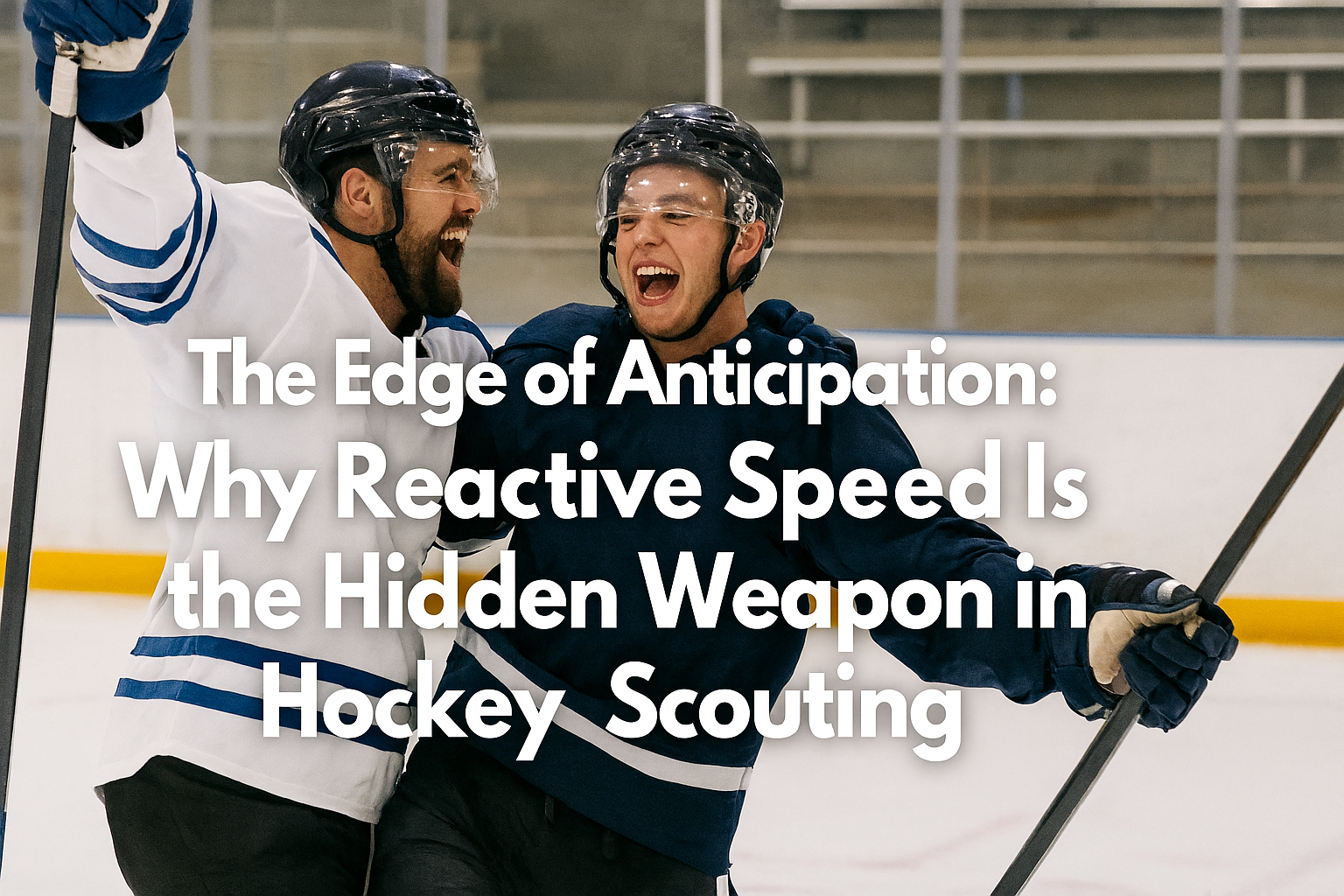
The Edge of Anticipation: Why Reactive Speed Is the Hidden Weapon in Hockey Scouting
Author: 1Rink Editor
In the world of hockey scouting, speed has long been a prized asset. But as the game evolves, scouts and development coaches are beginning to look beyond raw footspeed and straight-line acceleration. A new metric is emerging—one that’s harder to quantify but increasingly vital:reactive speed .
Reactive speed is the ability to process a stimulus—like a puck bouncing off the boards, a defender shifting position, or a teammate making a cut—and respond with the right movement, instantly. It’s not just about how fast a player skates; it’s about how fast they decide and act . For players and parents looking to understand what separates good from great, this is a concept worth diving into.
What Is Reactive Speed?
Reactive speed blends cognitive processing with physical execution. It’s the split-second decision to pivot when a forechecker closes the gap, the instinctive poke-check when a puck carrier shifts lanes, or the immediate transition from defense to offense after a turnover. It’s hockey’s version of “fight or flight,” but with finesse and precision.
According to Dr. Peter Vint, former Director of High Performance for USA Hockey, “Reactive agility is one of the most underappreciated components of elite performance. It’s not just about being fast—it’s about being fast when it matters .” (source )
Why Scouts Are Paying Attention
Traditional scouting metrics—goals, assists, plus-minus—still matter. But in high-tempo systems, especially at the collegiate and pro levels, reactive speed is becoming a differentiator. A player who can anticipate and respond faster than their peers can disrupt plays, create turnovers, and generate scoring chances even without elite puck skills.
In recent years, NHL teams have started incorporating cognitive testing into their draft evaluations. The Buffalo Sabres, for example, have used neurocognitive assessments to measure decision-making speed and pattern recognition. These tests don’t just predict hockey IQ—they reveal how quickly a player can react under pressure.
Training Reactive Speed: Beyond the Ladder Drills
For parents and players, the good news is that reactive speed can be trained. But it requires more than cones and ladders. Here are some proven methods:
- Small Area Games: These simulate game-like chaos, forcing players to make rapid decisions in tight spaces. Coaches can manipulate constraints to emphasize reaction time.
- Light-Based Reaction Systems: Tools like FitLight or BlazePods challenge athletes to respond to visual stimuli, improving neural pathways linked to decision-making.
- Video-Based Situational Training: Watching game film and pausing at key moments to ask “What would you do?” helps players build mental models for faster in-game reactions.
- Multi-Tasking Drills: Combining puck handling with auditory or visual cues (e.g., changing direction based on a coach’s call) builds cognitive flexibility.
Dr. Joe Baker, a leading researcher in sport expertise at York University, emphasizes that “the ability to make decisions under pressure is not just innate—it can be developed through deliberate practice.” (source )
Case Study: The Underrated Prospect
Consider the case of a mid-tier U18 defenseman who wasn’t the fastest skater on his team but consistently broke up rushes and transitioned play with surgical timing. Scouts initially overlooked him due to his modest point totals and average combine results. But when his reactive speed was measured through game film analysis—tracking his time-to-response after puck turnovers—he ranked in the top 5% of his cohort.
That player earned a scholarship to a Division I NCAA program, where his coaches praised his “game sense and ability to read and react faster than anyone on the ice.” His success wasn’t built on flash—it was built on anticipation and execution.
How Parents Can Support Development
For parents, supporting reactive speed development doesn’t mean hiring a cognitive coach or investing in expensive tech. It starts with creating environments that challenge decision-making:
- Encourage multi-sport participation to build diverse motor skills and cognitive flexibility.
- Play unstructured games—street hockey, pond hockey—where creativity and reaction are constantly tested.
- Ask reflective questions after games: “What was the toughest decision you had to make?” or “What surprised you out there?”
These conversations build awareness and help young athletes internalize the importance of reacting—not just acting.
Looking Ahead: The Future of Scouting Metrics
As hockey continues to evolve, expect reactive speed to become a formal part of scouting reports. With advances in AI and video analytics, teams can now track micro-decisions and response times in real-time. This data won’t replace traditional evaluations, but it will add a layer of insight that separates the merely talented from the truly impactful.
For players, this means that developing reactive speed isn’t just a bonus—it’s a necessity. And for parents, understanding this hidden metric can help guide training choices, game preparation, and long-term development strategies.
Conclusion
Reactive speed is the silent engine behind elite performance. It’s not always visible in the box score, but it shows up in the moments that matter most—when the puck is loose, the play is broken, and the game demands instant action. For players chasing the next level and parents supporting the journey, mastering this hidden weapon could be the key to unlocking hockey’s full potential.
Sources: